
The 12 Stone Decisions Nobody Reviews
By Olga Rakhmatulina | Olga Marble | Luxury Stone Procurement & Risk Strategy, USA

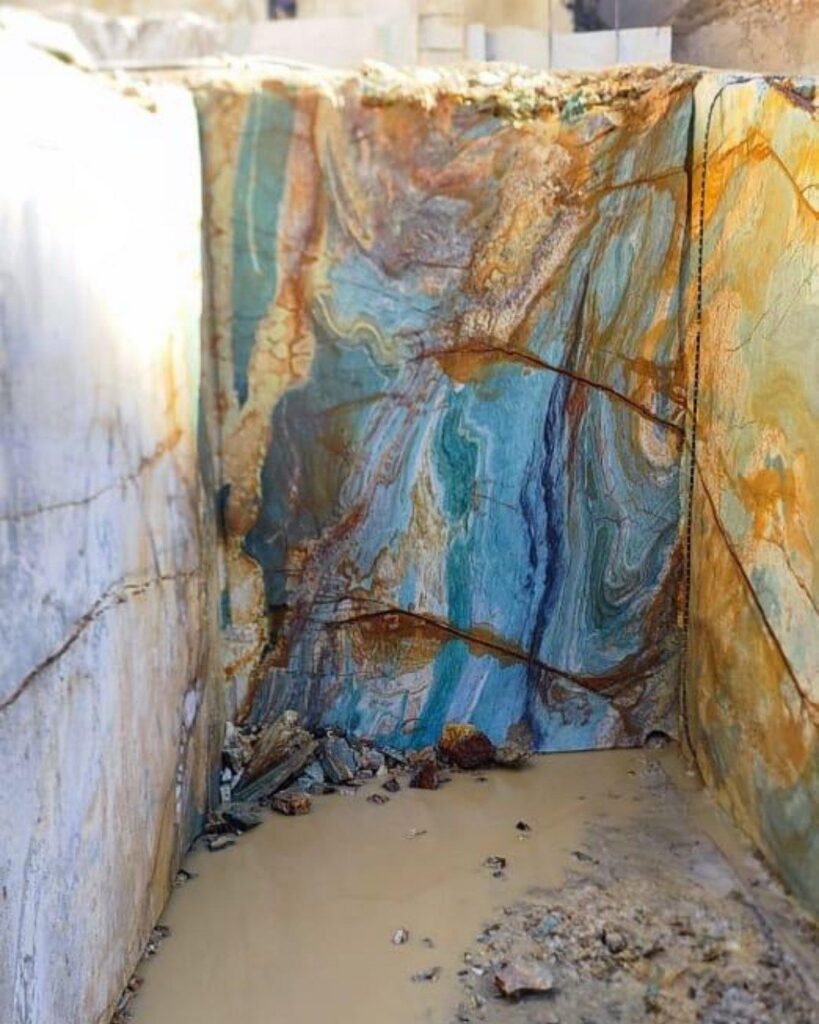
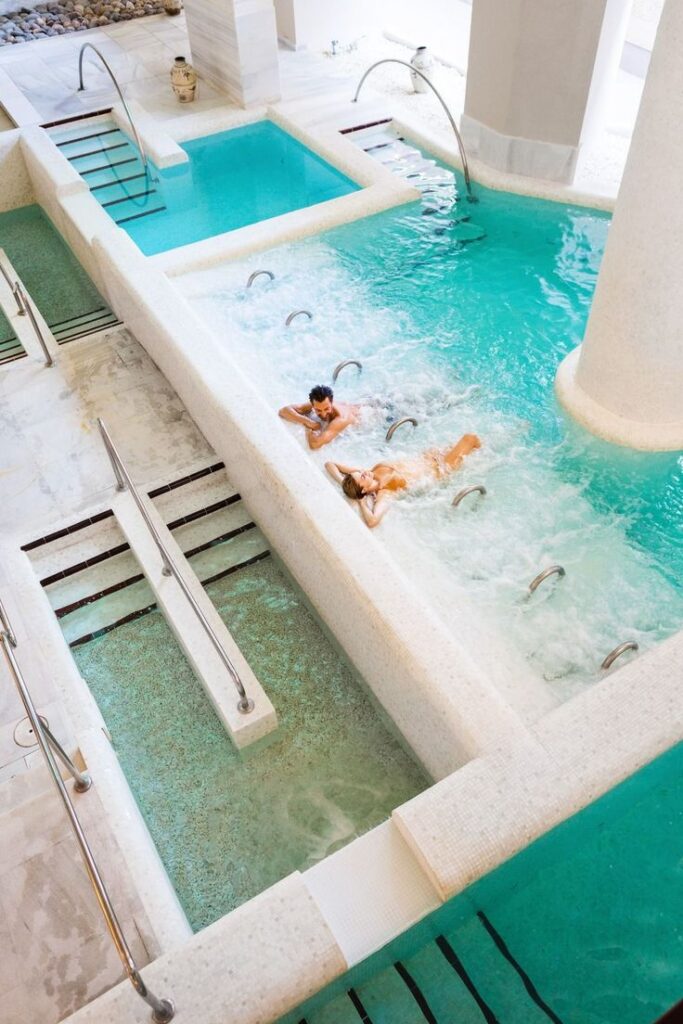
Everyone signed off on this pool deck. The designer. The fabricator. The supplier. The installer. And then someone walked across it wet.
This is not a hypothetical scenario. In luxury stone procurement USA, it happens with regularity — and it happens precisely because every professional in the chain did their job correctly. The designer made a beautiful specification. The fabricator executed it precisely. The supplier delivered on time. The installer followed the drawing to the letter.
However, the specification was wrong. Consequently, the project failed. And not one person in that chain was paid to notice.
Natural stone is among the highest-risk procurement categories in luxury construction. Moreover, pool decks and wet zones represent the most technically demanding subset of that category. Therefore, understanding what actually governs a pool deck’s performance — not what looks correct on a specification sheet, but what determines whether a surface remains safe, beautiful, and structurally sound over decades — is one of the most valuable forms of material intelligence a developer, architect, or construction manager can acquire.
This article maps the twelve decisions that determine pool deck performance. Nine of them are invisible in a standard specification drawing. All twelve must be reviewed as a system before a single slab is cut.


The Stone Was Only the Last Decision
In luxury stone procurement USA, the conversation almost always begins with the stone itself. Which material. Which origin. Which finish. These are, in fact, the final decisions in a sequence that should begin far earlier and far deeper — beneath the surface the client will ever see.
Beneath a natural stone pool deck lies a layered system of interdependent components. Each layer interacts with the layers above and below it. Each material choice in that stack either supports or undermines every other. Specifically, the following components govern the outcome — and each represents a decision point that requires expert review:
1. The Substrate
Type, preparation method, load capacity, and surface tolerance. A substrate that is not prepared to the correct flatness tolerance — typically 3mm over 3 metres for large-format stone — will telegraph movement into the stone above within one to three seasons. Furthermore, concrete substrates in outdoor environments continue to cure and move for years after installation. The stone system above must accommodate this, or it will crack.
2. The Waterproofing Membrane
Membrane type, thickness, and — critically — compatibility with the adhesive system above it. Many waterproofing membranes are not designed to bond with cementitious adhesives. In addition, the membrane must be continuous, with all penetrations and transitions correctly detailed. A single unbonded section beneath a pool deck creates a reservoir for water migration that will eventually manifest as staining, efflorescence, or stone delamination.
3. The Decoupling Layer
Natural stone moves. It expands and contracts with temperature, and it responds differently to moisture than the substrate beneath it. Consequently, a decoupling membrane between substrate and adhesive allows differential movement without transferring stress into the stone above. In outdoor and wet zone applications, this layer is not optional — it is the difference between a pool deck that lasts twenty years and one that begins cracking in year three.
4. The Adhesive Mortar — The Most Misspecified Component
This is where the most critical and most commonly overlooked decision occurs in luxury stone procurement USA projects. Standard cement-based adhesives are not designed for permanent wet zone or immersion applications. Moreover, they are not designed for large-format stone in outdoor environments.
A standard adhesive in a permanently wet environment will not fail. It is failing from the moment it is loaded.
The correct specification requires a two-component epoxy adhesive or a polymer-modified mortar rated for wet zone and immersion use, with the correct open time for the slab format being installed. In addition, the mortar must achieve full coverage — a minimum of 95% contact between adhesive and stone — or voids beneath the slab will allow water ingress and pressure buildup that eventually lifts the stone from beneath.
5. The Grout Joint Width
Natural stone in outdoor environments moves seasonally. Therefore, grout joints must be sized to accommodate that movement without fracturing. An undersized joint — specified for aesthetic reasons, because thin joints look more refined — will transfer movement stress into the stone itself. The result is cracking that appears to originate in the stone, but in fact originates in the specification.
6. Water Chemistry — The Invisible Threat
Chlorinated pool water maintains a pH between 7.2 and 7.8 under normal conditions. However, the concentration of chlorine and pool chemicals that contacts the underside of a pool deck through grout joints and adhesive interfaces is frequently higher — and more aggressive — than the surface concentration the stone will face directly.
Chlorinated pool water has a pH that attacks certain adhesives and certain stones from beneath. Invisibly. For months. Before the surface shows a single sign.
Specifically, calcium carbonate-based stones — marbles and limestones — are chemically reactive to acidic conditions. When pool water chemistry drifts, even temporarily, the cumulative chemical attack on the underside of marble pavers can cause structural weakening that is invisible at the surface until the stone begins to hollow, crack, or delaminate. Moreover, certain sealers that perform correctly on the surface do not protect the underside. This is a system-level issue that requires specification of the adhesive, grout, and sealer as a chemically compatible assembly.
7. Stone Species — Geological Classification, Not Trade Name
In the US market, between 30 and 60 percent of slabs sold as quartzite fail petrographic verification. This is not a minor issue — it is a systemic failure of expertise across the supply chain. A stone sold as quartzite may be a phyllite, a schist, or a marble with quartzite-like aesthetics, but with entirely different performance characteristics under load, thermal cycling, and chemical exposure.
Therefore, stone species for wet zone and pool deck applications must be verified by geological classification, not trade name. The specification must reference mineralogical composition, water absorption rate (ASTM C97), and slip resistance (DCOF — Dynamic Coefficient of Friction, minimum 0.42 for wet interior surfaces, higher for outdoor wet zones).
8. Surface Finish — The Specification That Ended This Project
Polished quartzite in a wet zone is not a stone problem. It is a decision problem.
Surface finish directly governs slip resistance. However, it also governs water management — how water moves across the surface, whether it beads, sheets, or pools. In a luxury pool deck context, the finish must balance the aesthetic intent of the design with the DCOF requirements of the zone. Specifically, the following finishes are appropriate for wet zone consideration: flamed, brushed, sandblasted, or bush-hammered. Polished and honed finishes require DCOF testing on the specific stone — not on a category basis.
9. Batch Consistency and Density Testing
Natural stone is not a manufactured product. Consequently, variation exists between quarry blocks, between slabs from the same block, and between deliveries sourced months apart. For pool deck applications, density variation translates directly into absorption variation — and absorption variation means that areas of the deck that appear identical will behave differently under chemical exposure and thermal cycling.
Therefore, density testing (ASTM C97) and water absorption testing must be conducted on the specific batch to be installed, not on the stone category in general. In addition, a reserve batch — from the same block — should be identified and reserved before installation begins for future repairs.
10. The Sealer — Not a Finish, a System
Sealer type, penetration depth, and reapplication cycle must be specified before installation, not after. Moreover, the sealer must be compatible with the adhesive, grout, and stone combination — not selected independently. A sealer that performs correctly on marble in an interior application may not be appropriate for the same stone in an outdoor, chemically active, thermally stressed pool deck environment.
Specifically, the specification must address: penetrating vs. topical application; whether the sealer requires primer on certain stone types; the reapplication interval in a pool environment (typically shorter than interior specifications indicate); and the cleaning protocol that maintains sealer integrity without chemical degradation.
11. Installation Sequence and Cure Time
The installation sequence in a pool deck environment is not interchangeable. Specifically, the waterproofing membrane must achieve full cure before adhesive application. The adhesive must achieve full cure — not open time — before grouting. The grout must achieve full cure before sealing. And the complete installation must achieve full cure before the pool is filled or the deck is exposed to water.
In practice, schedule pressure routinely compresses these intervals. However, in a pool deck environment, compressed cure time means the system has not achieved its designed performance before it is loaded. The result is failures that appear within the first season but are attributed — incorrectly — to material defects.
12. Zone Assignment — The Decision That Should Come First
Zone assignment is the determination of which stone is appropriate for which area of a project based on the technical demands of that area. It is the first decision that should be made in any stone specification process. In luxury stone procurement USA, it is almost always the last.
In a pool and spa environment, zone assignment requires classification of each surface area by: wet/dry cycle frequency; chemical exposure type and intensity; slip resistance requirement; thermal cycling range; and maintenance access and protocol. Consequently, a stone that is perfectly specified for the dry lounge area surrounding a pool may be entirely inappropriate for the pool deck itself — even if they appear identical in a sample box.
Who Is Responsible?
The honest answer is that in a standard project delivery model, nobody is specifically responsible for reviewing these twelve decisions as a system. Furthermore, nobody is paid to be.
The designer is responsible for aesthetic intent and material specification. However, the designer is not a procurement specialist and is not positioned to verify batch consistency, adhesive compatibility, or water chemistry interaction.
The supplier is responsible for delivering what is specified. However, the supplier’s responsibility ends at delivery — not at performance. In addition, the supplier has a commercial interest in the materials they stock, which does not always align with the optimal specification for the project.
The fabricator is responsible for cutting and finishing to the specified dimensions and surface. However, the fabricator works from the specification they are given — not from an independent assessment of whether that specification is correct.
The installer is responsible for installation to the specified method. However, the installer follows the drawing — and if the drawing does not specify adhesive mortar type, cure intervals, or joint movement accommodation, the installer defaults to standard practice, which may not be appropriate for this specific application.
Not one person in that chain was responsible for the system beneath the stone. That is the gap. That is exactly where a buyer-side stone advisor works.
The function of a buyer-side stone procurement advisor in luxury projects is precisely to occupy this gap — to review the specification as a system before any component is ordered, to identify conflicts and omissions before they become on-site failures, and to protect the project from decisions that look correct in isolation but fail in combination.
What Happened on This Project
The project referenced at the opening of this article involved a luxury hospitality development with a significant pool and spa stone scope. The stone was beautiful. The specification was detailed. The team was experienced.
However, the surface finish specified for the pool deck was polished. The stone species, sold as quartzite, was not verified by petrographic analysis. The adhesive specified was a standard cementitious product. The zone assignment decision — which surface areas required wet zone specification — was not separately reviewed from the general stone schedule.
Specifically, the slip resistance of the specified finish in a wet condition did not meet the DCOF threshold for outdoor wet zone applications. Moreover, the stone, upon independent testing, proved to be a metamorphic rock with absorption characteristics inconsistent with the quartzite specification.
The intervention occurred before installation was complete. Therefore, the client did not lose the stone. They lost time. That was enough of a lesson.
The Standard That Governs This Decision
For architects and specification writers working on luxury stone procurement USA projects with pool and spa scope, the following standards govern wet zone stone specification:
— ASTM C97: Standard Test Methods for Absorption and Bulk Specific Gravity of Dimension Stone. Required for density and absorption verification of all wet zone stone.
— ASTM C1028 / DCOF AcuTest: Slip resistance measurement. Minimum DCOF 0.42 for level wet surfaces; higher thresholds apply to ramps and pool surrounds with slope.
— ANSI A108 / A118: American National Standard specifications for installation of ceramic tile and stone — governs adhesive mortar performance requirements by application type.
— IAPMO / ANSI Z124: Relevant for pool and spa surround material performance requirements in commercial installations.
— ADA Standards for Accessible Design: Section 4.5 — Ground and Floor Surfaces — applicable to all accessible pool deck areas in hospitality and commercial developments.
In addition, the Tile Council of North America (TCNA) Handbook for Ceramic, Glass, and Stone Tile Installation provides installation method references that govern adhesive selection, joint sizing, and movement accommodation for exterior wet zone stone applications.
The Procurement Principle That Protects Against This
In luxury stone procurement USA, the single most protective principle is this: stone specification and stone procurement must be reviewed as a system, not as a sequence of independent decisions.
Specifically, this means:
— Zone assignment precedes material selection — not the reverse.
— Adhesive, grout, sealer, and waterproofing are specified as a compatible assembly before the stone is selected, not after it is delivered.
— Stone species is verified by geological classification and independent testing — not accepted on the basis of a trade name or supplier representation.
— Batch consistency is tested and a reserve batch is identified before installation begins.
— Cure intervals are specified and protected from schedule compression.
— The complete system is reviewed by an independent advisor whose only accountability is to the performance of the project — not to the sale of any component within it.
This is the function of buyer-side stone procurement advisory in luxury construction. Moreover, it is the function that standard project delivery models do not provide — and cannot provide, because no party in the standard model is positioned to review the system independently of their own commercial interest in its components.
If You Are in Pre-Construction on a Project with Stone in Wet Zones
The best moment to review a stone specification for pool deck, spa, or wet zone applications is before the specification is locked — before slabs are cut, before adhesive is ordered, before the substrate is poured.
However, the second-best moment is now. In luxury stone procurement USA projects, catching a zone assignment error or a finish specification conflict at any point before installation is complete protects the project from a failure that is far more expensive to resolve after the fact.
Stone does not fail on its own. Decisions do.
Olga Marble provides independent, buyer-side stone procurement advisory for luxury hospitality, private estate, and high-end residential developments in the United States. We carry no supplier relationships, hold no inventory, and receive no supplier commissions. Our function is to protect the project.
Quartzite Professional Guide page
Book a Stone Strategy Call
Call me before the slabs are ordered.
📞 +1 443.973.1946
✉️ olga@olgamarble.com
🌐 www.olgamarble.com
Leave a Reply